


As the days start to grow shorter and there’s a bit of a nip in the evening air, my thoughts turn to simple but heartier dishes. And here’s one that really hit the spot for me this week, orecchiette con cavolfiore, the little ear-shaped pasta from Puglia paired with cauliflower.
Most often, orecchiette con cavolfiore is made lean. Much like its better-known cousin orecchiette con cime di rapa, it’s made by cooking the pasta in the same pot as the vegetable and then dressing it with garlic, anchovy, hot pepper and plenty of good olive oil.
Orecchiette con cavolfiore is delicious that way, but since we’ve already covered that approach, I thought it would be nice this time to feature another, less common way of making it. In this version, said to be popular in the provincia di Bari where my grandfather Lorenzo was from, the anchovies give way to lardo, slowly rendered until golden. The dish is then finished with a generous grating of pecorino. The result is heartier and more rustic, just right for a chilly evening.
Simple but satisfying
Like so many dishes in the cucina povera tradition, orecchiette con cavolfiore doesn’t ask much of the cook other than a little tender loving care. You render diced lardo gently in a skillet until it’s nice and golden brown. Meanwhile, you boil cauliflower florets and orecchiette in the same pot. They then go into the skillet with the rendered lardo, and you toss everything together, crushing some of the florets as you go so they melt into a creamy coating. A handful of pecorino, and you’re done!
In Bari, cooks would make their orecchiette con cavolfiore with the particularly tender and flavorful local green cauliflower called cima di cola, but you can turn out an almost as delicious (if rather monochrome) dish with ordinary white cauliflower. And if you can’t find lardo, then pancetta or even guanciale gets the job done.
So if you’re looking for a cozy, satisfying weeknight pasta this autumn, give orecchiette con cavolfiore a try. I think you’ll enjoy this little gem of Apulian home cooking.
Ingredients
Serves 4-6
- 1 kg (2 lbs) cauliflower, cut into small florets
- 400 g (14 oz) dried large orecchiette (or 500 g (1 lb) fresh)
- salt
For the skillet:
- 150 g (5 oz) lardo, preferably fresh, trimmed of its rind and cut into cubes or lardons
- olive oil
- salt, if needed
To finish the dish:
- freshly grated pecorino cheese
Directions
In a wide skillet or sauté pan, let the lardo sauté very gently in a little olive oil over a low heat for about 10 minutes, or until most of the fat has rendered out and the cubes are golden with crisp edges. Remove the browned lardo and reserve.
Meanwhile, bring a large pot of well salted water to a boil. Add the cauliflower. If using dried orecchiette, add it to the pot along with the cauliflower. If using fresh, wait at least 5 minutes before adding it. Cook until the cauliflower is fully tender and the orecchiette are al dente.
Using a skimmer, transfer the pasta and cauliflower to the skillet, along with a small ladleful of the cooking water. Raise the flame and toss vigorously, crushing some of the florets against the pan so they melt into the fat and coat the pasta. Cook over a lively flame to let any excess liquid cook off.
Take the pan off the heat, add the pecorino and toss again, loosening with a little more cooking water if needed, until the cheese has completely melted into a creamy sauce. Taste and adjust for seasoning if need be.
Serve right away, topped with the lardo, with some extra grated pecorino on the side for those who want it.
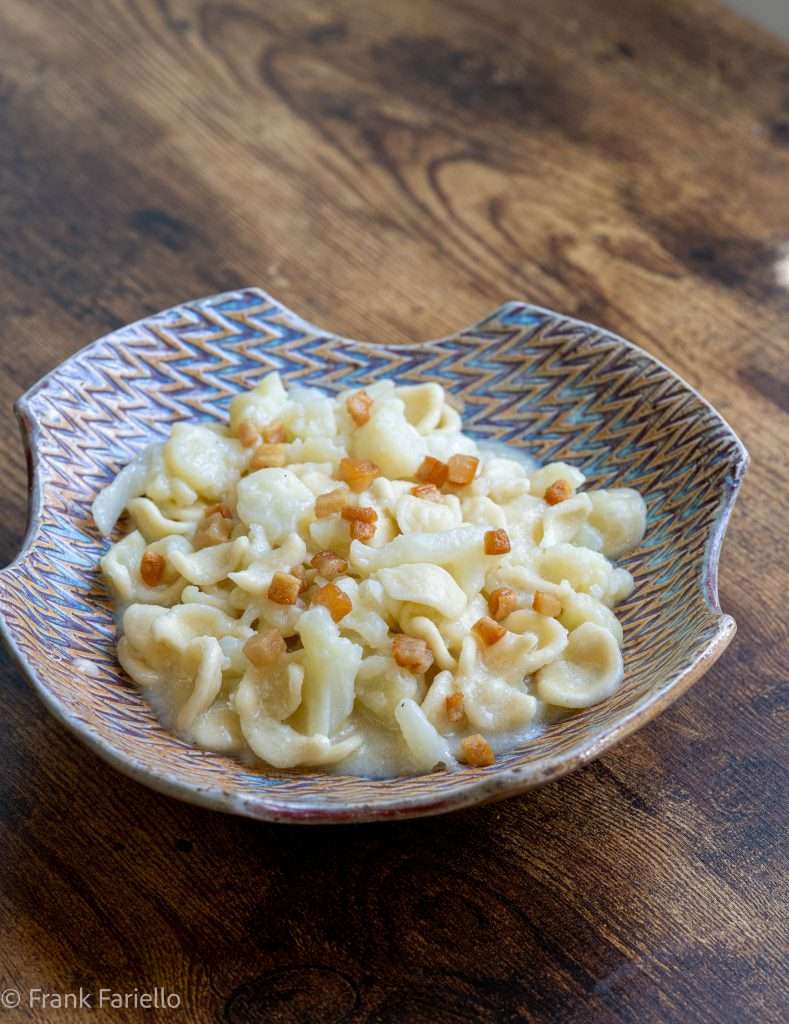
Notes on orecchiette con cavolfiore alla barese
There’s not too much to trip you up here, but if you’re using lardo (or guanciale) be sure to go low and slow. Both have low smoke points, and you want to render out the fat as they brown. If you’re doing things right, the lardo should turn translucent, then chalky white, then eventually a golden brown. If the fat begins to smoke, take the skillet off the heat and let it cool down a bit before putting it back on the burner over a gentler flame.
The other tricky bit is making sure the pasta and cauliflower finish cooking at the same time. The cauliflower should be fully tender—tender enough so you can crush some into the sauce—but not mushy. The pasta should be, as always, al dente. The cauliflower usually takes about 10-12 minutes. Dried orecchiette usually take about the same amount of time. Fresh orecchiette, on the other hand, usually only take 3-5 minutes. You can roughly calculate cooking times accordingly.
Fortunately, orecchiette are a forgiving pasta that’s hard to overcook. But if you want to be totally safe, you can always cook the cauliflower first, transfer it to the pan with the rendered lardo, then cook the pasta. This way you have total control over the doneness of veg and pasta. A number of authorities say this is the ‘right’ way to do it anyway.
Choosing your cauliflower
As noted at the top, the ideal choice here is the cima di cola, a cauliflower varietal native to Bari and its environs. It is light green in color, quite assertive in taste and cooks rather more quickly than other varietals. But since most production is hyper-local, you’re not likely to find it in your local market. In fact, its production, never at scale, is on the decrease and it’s been listed as a kind of endangered species. A Romanesco or other green cauliflower would do well, as would another color of cauliflower for that matter or—as I’ve done here—you can just use standard white cauliflower.
Another lovely choice would be the Chinese cauliflower sometimes marketed as fioretto cauliflower. It has lovely slender green stems and delicate florets and an agreeable almost sweet taste. It cooks quickly and lends itself very well to stir frying. Since I discovered it at one of our nearby Asian supermarkets, I’ve become a convert. It works very well in this and other cauliflower dishes.
Choosing your pasta
If you have the choice, go for the larger, slightly elongated orecchiette called strascinati. They are perfect for chunky sauces like this one. Otherwise standard dried—or even better fresh—orecchiette work well. Simply cut the cauliflower into pieces about the size of the orecchiette you’re using.
If you can, avoid the ersatz orecchiette sold by the big pasta brands. They are really just another factory pasta extruded in an orecchiette-ish shape. (I’m looking at you, Barilla and DeCecco.) Real orecchiette should be thick and chewy with a visibly rough exterior. If you can’t find orecchiette where you live, I’d suggest going with another shape altogether, one with cavities like gomiti (elbows) or conchiglie (shells) that can catch a chunky sauce. Or maybe something similarly chunky like rigatoni.
Choosing your pork
The recommended pork product here is lardo fresco, or fresh (uncured and unrendered) fatback. But if that’s not available, then I’d just go for cured lardo and go a little easy on salting the pasta water.
Another, easier to find alternative would be pancetta. If using pancetta, which is less fatty than lardo, increase the amount of oil you’re using. (I’ve seen recipes calling for smoked pancetta, so if you like that smoky taste, slab bacon would also work here.) But as a Roman at heart, a nice chunk of guanciale would be my go-to substitute. It’s almost as fatty as lardo and lends a wonderfully lusty flavor to the dish.
Choosing your pecorino
The ideal choice here would be another local product, the PDO Apulian pecorino called canestrato pugliese. Principally produced in and around the town of Foggia, canestrato pugliese takes its name from the traditional practice of shaping the cheese in rush baskets called canestri, which create marks on the hard outer rind.
But if you can’t find canestrato—and it’s not easy to find—then the similarly spicy, tangy pecorino romano works quite well.
Variations
If you want to go with the more classic lean version of this dish, then follow the same method outlined in our post on orecchiette con cime di rapa, using the same measurements for the pasta and cauliflower given here. In that recipe, instead of sautéing the pork, you sauté some garlic and peperoncino, then add a few anchovies to the skillet. If you like, you can brown some breadcrumbs in olive oil for a crunchy topping.
Other variations include a red version, where you add a few tomatoes to the sauce after the lardo has rendered, creating a rich, porky tomato sauce.
Making orecchiette con cavolfiore ahead
Like most pastas, this is a dish best served as soon as you make it. And it’s so quickly made that there’s no real need to make it ahead.
That said, as mentioned orecchiette are a fairly forgiving pasta, so if you really need to make it ahead for whatever reason, or you have leftovers, you can gently reheat the dish without much loss in quality.
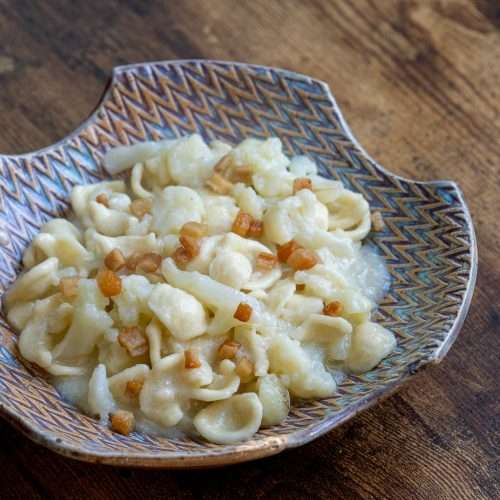
Orecchiette con cavolfiore
Ingredients
For the pot:
- 1 kg cauliflower cut into small florets
- 400 g dried orecchiette or 500 g (1 lb) if using fresh
- salt
For the skillet:
- 150 g lardo preferably fresh, trimmed of its rind and cut into cubes or lardons
- olive oil
- salt if needed
To finish the dish:
- freshly grated pecorino cheese
Nutrition
Discover more from Memorie di Angelina
Subscribe to get the latest posts sent to your email.



As always, Frank, thanks for posting. I just made it and it is a good, simple dish. I can’t find lardo nearby so I used guanciale instead. I also added some black pepper for spice.
So glad you liked it, Denio!
The way you describe crushing the cauliflower into the sauce had me imagining that creamy, chunky texture, and now I’m pretty sure this needs to be my next weeknight dinner.
Hope you like it, Raymund! Thanks for stopping by.
Frank, I love the simplicity of the ingredients. I often look at your recipes and think this is proof simple is best. You need just a few quality ingredients to make it happen.
As always, thanks for sharing these delicious Italian dishes with us.
Velva
You’re welcome, Velva! And thanks so much for stopping by.
This sounds wonderful! For some reason, I’d really love to visit Bari. Well, for the food reasons!
Haha! The food is really delicious—but there’s also lots to see there and even more so close by. Puglia is spectacular.
I do enjoy orecchiette with cauliflower but have always made the lighter version. I’m looking forward to trying this flavorful version.
I usually make the lighter version, too, but this one is nice as a change of pace. As you say, it’s quite flavorful in its own right. Enjoy!
Oh this sounds quite delicious, Frank – yet another example of how Italian food can be both simple and elegant at the same time! I would be very happy to sit down to this meal at the dinner table tonight.
You’re welcome any time, David!
ooh cauliflower yay! I do love some cauliflower!
sherry
Apparently it’s “controversial” in some circles but I love it, too. Thanks for stopping by.
Excellent and Easy. I have been making this recipe for years.
Thanks, Antoinette!
This sound luscious, Frank — lardo always makes things better. I know I have used orecchiette for other dishes — but I think I use it most often with rapini or even broccoli. It is nice to have another dish that uses it — and, of course, orecchiette is a signature pasta of Bari!
Indeed! I also usually make them with broccoli rabe (almost always, in fact) but as you say this makes for a nice change of pace.
Great combination of ingredients! So simple, yet the result is so sophisticated. 🙂
I couldn’t agree more, Ronit! Thanks for stopping by. 🙂
love this type of pasta dishes. I discovered the combo in Francesconi actually (pasta e cavolo, also on my blog) and I was really surprised (how good it was)
stefano
Yes, I’ve made it that way, too. Also excellent.
This is a very interesting way to use cauliflower and pasta! The crispy bits of pork and the pecorino sound perfect to enhance it. I like the serving dish!
Thanks, Barb! I hope you give it a try some time.
My mother made this all the time. It is delicious and a favorite in our family. I often add an extra twist of black peppercorn and toasted breadcrumbs. My mouth is watering.
Sounds delightful, Jeanine!
I always love the cute shape of orecchiette. This sounds like quite tasty, esp. if one enjoys cauliflowers and pasta.
Indeed! Thanks for stopping by, Angie.
That looks delicious and I love cauliflower. While I don’t think I can get cima di cola, I can get yellow and purple cauliflowers depending on the season. I can definitely get guanciale and lardo in the Italian deli. I’ve also grown far too many tomatoes this year so this is a good way to use some up!
All the colors work here for sure. And if you have the cured pork you’re ready to go!I haven’t actually tried the variation with tomatoes personally but I imagine it has to be good.