


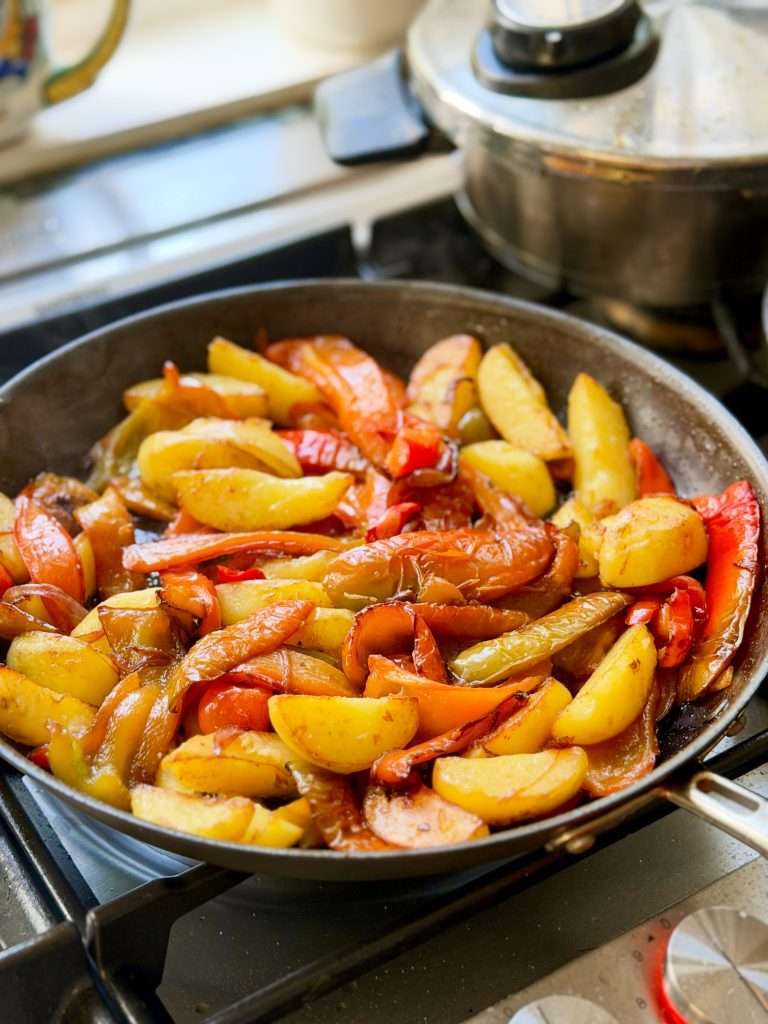
Here is one of the signature dishes of the southern region of Calabria, on the toe of the Italian boot: pipi e patate, or Peppers and Potatoes. In its simplest incarnation, it is quite literally just that, peppers and potatoes sautéed together in olive oil and seasoned with salt.
The magic of this simple dish, like so many others in the cucina povera tradition, lies in the quality of its ingredients and the care you take in preparing them.
And here I have to confess a true rendition of pipi e patate requires two ingredients most of us are not likely to be able to source. One is the round, intensely flavored and just slightly spicy pepper from the area around Reggio Calabria called peperoni reggini, or pipi in the local dialect—hence the very name of the dish. The other is the prized local potatoes called patate silane, grown in La Sila, the mountainous plateau that stretches across three provinces in the northern half of Calabria.
Without these two main characters, I should probably call my version of the dish simply peperoni e patate. My Calabrian friends say it’s just not the same dish without the pipi in particular. No doubt.. But if you ask me it’s delicious all the same.
Two methods for making pipi e patate
There are two methods for making pipi e patate. In the better known one, said to be typical of the province of Crotone, you sauté the potatoes first, then add the peppers to the same skillet and let the two ingredients simmer together until both are tender.
But in the method I want to present in this post, more typical of La Sila, you sauté the peppers first until almost tender, remove them from the skillet, then sauté the potatoes in the same skillet until they, too, are almost tender. Then the peppers go back into the pan, so that peppers and potatoes can finish cooking together.
Origins of the dish
Pipi e patate started out as a farmer’s lunch. They would carry bread stuffed with fried peppers and potatoes with them into the fields as their midday meal. The loaf provided a kind of edible lunch box, shielding its savory filling from the sun’s heat while working long hours outdoors. And it added valuable extra calories for the day’s hard physical labor.
While you will still see the dish occasionally served this way, today pipi e peperoni is usually served as a side dish for roasted or grilled meats. That said, bread should never be too far away, better to mop up its delicious juices.
Ingredients
Serves 4-6 as a side
- 500g (1 lb) yellow fleshed potatoes, peeled and cut into wedges
- 500g (1 lb) red and/or green peppers, seeded, trimmed and cut into largish strips or squares
- salt
- olive oil
Optional:
- 1 small fresh red hot pepper, seeded and sliced
- 1 small red onion, thinly sliced
Directions
Sauté the peppers
In a wide skillet, heat a generous pour of olive oil then add the sliced peppers. Sauté over a lively flame until the peppers are almost tender and their skins have crinkled and have started to brown around the edges. Regulate the flame so the peppers don’t brown too much.
If using, add the onion and red peppers a few minutes before the peppers are done.
Remove the peppers to a plate or bowl, leaving the oil in the skillet.
Sautê the potatoes
Lower the heat a bit and add the potatoes. Give the potatoes a stir to cover them in the oil, the cover. Gently simmer until the potatoes are half cooked.
Uncover the skillet and raise the heat. Sauté the potatoes over a lively flame until they are almost fully tender and lightly browned.
Finishing the dish
Add the peppers and any accumulated juices back into the skillet. Turn to mix the potatoes and peppers together. Season to taste and let the peppers and potatoes simmer together until they are both perfectly tender. If you like, you can raise the heat at the end to get some caramelization on them.
Turn off the heat. Let the potato and peppers rest, covered, for at least 30 minutes before serving. Serve still slightly warm or, if you want to eat your pipi e patate hot, gently reheat before serving.
Notes on pipi e patate
The dish could hardly be simpler, but as I said at the top, if you want to know why this dish is so beloved by the Calabrese, you need to take care in its preparation and in your choice of ingredients.
As for the preparation, here are my main tips:
Use the right skillet. Use a skillet that’s wide enough to hold the ingredients in more or less a single layer, so they actually sauté rather than steam. It’s wise to use a non-stick skillet (potatoes are notoriously sticky) or well-seasoned carbon steel. If using a carbon steel skillet, let it heat up first before adding the oil.
Don’t be stingy with the oil. Use a generous pour, enough to cover the bottom of the skillet entirely. You need the oil to prevent sticking and also for flavor transfer; the peppers flavor the oil, which then flavors the potatoes. If need be, you can always skim off excess oil before serving. But then again, a lot of people (including me) find that the best part.
Finally, don’t skip the rest. Most recipes don’t mention this—it’s actually my little personal touch. But trust me, it improves the flavor and texture immensely. And not coincidentally, it mimics the old practice of storing the dish inside a bread before eating.
Choosing your ingredients
The other key point is choosing the two main ingredients with care.
Choosing your peppers
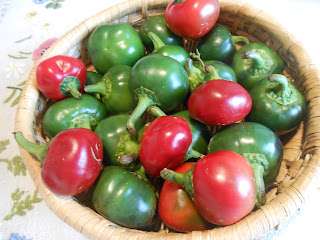
As mentioned at the top, a true pipi e patate is made with peperoni reggini, a small, round, somewhat squat pepper variety typical of the area around Reggio Calabria in southern Calabria. Like other peppers, they come red or green. They have thin, digestible skins, with notably meaty and flavorful flesh. While not hot peppers per se, the red ones in particular carry a bit of heat.
Unfortunately, peperoni reggini are hard to find outside their area of production, even in Italy. So we need to find substitutes. They closest thing visually would be a cherry pepper, but they are far too spicy. Personally, i’d go with horn-shaped frying peppers or the smallest bell peppers you can find, which is what I used for the dish.
Choosing the potatoes
As mentioned at the top, the other key ingredient are the prized patate silane, which enjoy an IGP (Indicazione Geografica Protetta) designation.
Patate silane are prized for their excellent culinary qualities and exceptional keeping ability. Their high dry-matter content makes them especially well suited to frying, since they hold their texture during cooking. They’re also well suited to roasting, gratins, and other preparations where you want the potato to hold its shape rather than turn watery or mushy.
Patate silane are popular in Italy, especially in the south. But sadly they aren’t exported, even to other EU countries. Look for another varietal that holds its texture, so called yellor waxy potatoes like Yukon Golds or Maris Piper.
Variations
They say every household in Calabria has its own version of pipi e patate, but as mentioned at the top, the main variants involve the method for cooking the peppers and potatoes, given that peppers cook fairly quickly, while potatoes take some time to cook. The beauty of this alla silana method is that you cook them separately and avoid the dilemma altogether.
The Crotonese method
Most recipes, though, follow the method a Calabrian friend says is typical of the area around the town of Crotone: you slice the potatoes rather thinly, then sauté them until at least half done, and only then add the peppers to the skillet to cook along with the potatoes. With this method, you have a pretty good shot at having fully tender, but not mushy veg by the end.
Since the raw peppers introduce a fair amount of humidity, this method results in a dish that tastes rather more simmered than fried. Still delicious, though!
Other variations
Other variations involve ingredients. As already mentioned, many recipes (perhaps the original) omit the onion. In other versions of this dish, you add a bit of passata di pomodoro or peeled and chopped fresh tomato to finish the dish during the final stage of cooking. Some cooks add fresh herbs—a bit of basil or a pinch of oregano.
Finally, my Calabrian friend told me about her little ‘secret’ ingredient. She adds a dollop or two of nduja to the skillet right before the end of cooking. The nduja shouldn’t actually cook, just let it melt and infuse its intense flavors into the veg.
Just to note: The hot pepper isn’t a variation; it’s just there to mimic the mild heat of the peperoni reggini. You can omit it if you prefer.
Making pipi e patate ahead
Although most recipes will tell you to serve pipi e patate while it’s still hot, as mentioned I find the dish is much better made after a rest of at least 30 minutes. This lets the ingredients get better acquainted and for the potatoes to absorb the flavors of the peppers and seasoned oil.
The dish will keep for serveral days in an air container in the fridge. Let is come back to room temperature, and if you like, you can reheat it gently before serving.
Although I haven’t tested it, I doubt this dish would take terribly well to freezing.
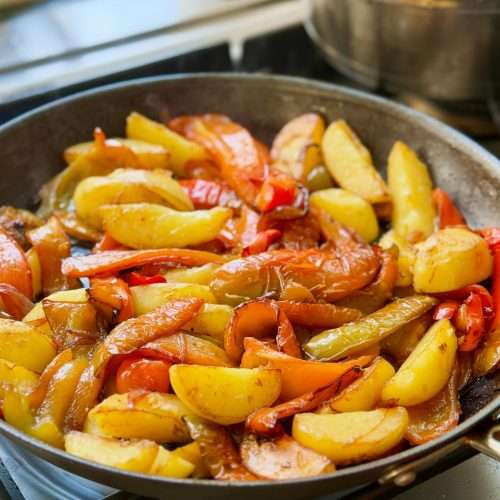
Pipi e patate alla silana
Ingredients
- 500 g yellow fleshed potatoes peeled and cut into wedges
- 500 g red and/or green peppers seeded, trimmed and cut into largish strips or squares
- salt
- olive oil
Optional:
- 1 small fresh red hot pepper seeded and sliced
- 1 small red onion thinly sliced
Instructions
Sauté the peppers
- In a wide skillet, heat a generous pour of olive oil then add the sliced peppers. Sauté over a lively flame until the peppers are almost tender and their skins have crinkled and have started to brown around the edges. Regulate the flame so the peppers don’t brown too much.
- If using, add the onion and red peppers a few minutes before the peppers are done.
- Remove the peppers to a plate or bowl, leaving the oil in the skillet.
Sautê the potatoes
- Lower the heat a bit and add the potatoes. Give the potatoes a stir to cover them in the oil, the cover. Gently simmer until the potatoes are half cooked.
- Uncover the skillet and raise the heat. Sauté the potatoes over a lively flame until they are almost fully tender and lightly browned.
Finishing the dish
- Add the peppers and any accumulated juices back into the skillet. Turn to mix the potatoes and peppers together. Season to taste and let the peppers and potatoes simmer together until they are both perfectly tender. If you like, you can raise the heat at the end to get some caramelization on them.
- Turn off the heat. Let the potato and peppers rest, covered, for at least 30 minutes before serving. Serve still slightly warm or, if you want to eat your pipi e patate hot, gently reheat before serving.
Nutrition
Discover more from Memorie di Angelina
Subscribe to get the latest posts sent to your email.


This looks so rustic and delicious, Frank! Peppers and potatoes are such a simple yet satisfying combination.
Thanks, Ben! Easy peasy and the pay off is really appealing.
This is the kind of dish that proves how much magic can come from just a few ingredients handled with care.
Indeed it does, Raymund!
Another perfect example of how food can be absolutely delicious without being complicated! Too bad we can’t source the exact peppers and potatoes here in the States, but this still sounds mighty tasty. Oh, and I love that nduja twist, too!
Definitely tasty even with generic ingredients. And the nduja takes it to another level!
Great dish. I don’t really understand the two different preparations – it all ends up the same, doesn’t it?!! In any case, a perfect Italian dish. I can eat anything Calabrian.
The difference is subtle but noticeable. Sautéing the veg separately creates drier heat so they taste more sautéed rather than simmered. Try it and see!
So a red pepper is what we call a capsicum? and a red hot pepper is a chilli??
sherry
Yes, I think so, on both accounts.
Oh I have made the Nigella Lawson version of this one. I had no idea it was an Italian recipe! Then again, she lived in Italy and loves all things Italian. I just don’t remember her saying …
cheers
sherry
Interesting. I’ll have to check out her recipe.
I probably overcooked the potatoes, and used a mix of yellow and red peppers, but we greatly appreciated this combination of flavours. I cooked some fresh borlotti beans with plenty of olive oil and rosemary to serve alongside, with a fresh tomato salad.
It might however be a good idea to update the recipe to correct the reference to putting the peppers in a “bowel” !
Sounds like a scrumptious meal, Pau!
And yes, thanks for the catch, lol! Corrected now.
We make this often, using US ingredients, and cook it with pieces of pork (rib ends), but I can only imagine how good this tastes using the pipi and patate silane!!!
If only we had them available to us, Christina! Sigh..
This is one of the dishes my grandmother used to prepare this time of year. It happened simultaneously while she was canning and preserving vegetables before the grapes picking just to be on the safe side. Brings warm memories….
So glad I could bring back some of those precious memories!
Grazie, this sounds delicious, I’ll give it a try soon!
Hope you enjoy it, Faustina. Thanks for stopping by!
A few simple but specially picked ingredients, a little knowledge and patience . . . how appetizing the result !
So true, Eha!
I agree, it sounds delicious even with whatever potatoes and peppers are available!
So true, Barb. Thanks for stopping by!
Simple dishes as you have shown are oft the most difficult to get just right but the most worthwhile at the same time. There may have to be substitutions but the methodology will be carefully followed with love . . . 🙂 !
I hope you enjoy it, Eha. Actually I’m pretty sure you will!
As you say (paraphrased), simple is magical. If I had potatoes and peppers, I would make this today to accompany a lamb roast. It would be perfect. Regarding the bread for sopping, Mark would say, “Starch with starch?” — but it sounds great to me. I’ll save this for my next bit of roasting.
This would be perfect with roast lamb, David!
As for starch on starch, I hear echoes of my dear departed mother…
The Pipi e patate alla silana looks delicious. While I won’t find the potatoes, it is possible I might find the peperoni reggini ,in one of a few nearby Italian delis. I bought a small ‘nduja last week, so I’ll have to try that version – it would make up for the lack of peperoni reggini.
Good luck with your search! And enjoy the dish.
Enjoy
Thanks!